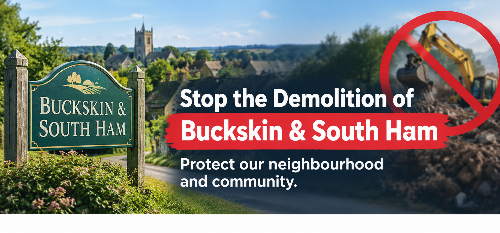
Buckskin & South Ham Redevelopment Updates is a single, searchable hub tracking the Buckskin and South Ham regeneration programme. It brings together council meeting records, committee papers, local reporting, developer updates, and community responses so residents, journalists, and campaign groups can follow decisions and timelines in one place. Use the filters to find meeting agendas, video recordings, and source documents; the site’s aim is to make the process more transparent and to support informed civic engagement and local accountability.
This portal is designed for residents, developers, consultees and community groups to understand proposed growth, review supporting evidence, and participate in shaping the borough’s future development strategy. Many proposals remain at draft or evidence stages and may change through consultation.

Policy SPS1: Scale and Distribution of Development

Policy SPS1 sets out the overall growth strategy for the borough, including where major housing, employment and infrastructure development will take place between now and 2042. Most growth is directed towards Basingstoke and strategic expansion areas.

The Local Plan proposes substantial growth across the borough through strategic urban extensions, town centre redevelopment, neighbourhood renewal projects and new garden communities.
Major proposed housing developments include:

  • Northern Manydown: approximately 3,700 homes
  • Southern Manydown: approximately 2,750 homes by 2042
  • Popham Garden Village: approximately 1,800 homes by 2042
  • Upper Swallick Garden Village: approximately 1,200 homes
  • Whitmarsh Lane / East of Basingstoke: approximately 1,500 homes

Together, strategic allocations account for more than 12,000 proposed homes across the borough, alongside roads, schools, healthcare facilities, green spaces and transport infrastructure.

Most of these developments are still outstanding and remain at the planning, infrastructure or masterplanning stage.

Policy extract (verbatim)

“Development will be directed to the most sustainable locations within the borough in accordance with the settlement hierarchy.”

In summary: Most future development and housebuilding will take place around Basingstoke and large strategic growth areas where the council plans to expand infrastructure and services.

View Policy: SPS1: Scale and Distribution of Development .

Policy SPS2: Neighbourhood Renewal

Policy SPS2 identifies several existing neighbourhoods across Basingstoke as potential areas for long-term regeneration and renewal. The policy supports future redevelopment, estate improvement, infrastructure upgrades and public realm investment through detailed Masterplans, design codes and Supplementary Planning Documents (SPDs) prepared in consultation with local communities.

The draft Local Plan identifies Buckskin and South Ham, Popley, Norden and Winklebury as the first neighbourhoods where renewal and regeneration may take place. These areas include older housing estates, public spaces and infrastructure that the council believes may require significant long-term investment or redevelopment.

The policy states that neighbourhood renewal opportunities could deliver approximately 1,000 net additional new homes over the plan period through redevelopment, estate renewal and more efficient use of previously developed land within existing urban areas.

Although the policy identifies individual renewal areas, it currently provides limited detail about how these neighbourhoods connect together within a wider borough-wide regeneration strategy. A clearer overall framework would help residents understand:

  • Which neighbourhoods may change over time
  • How redevelopment could be phased and delivered
  • What new infrastructure may be required
  • How transport and public spaces could improve
  • How affordable housing and community facilities would be protected
Policies Map showing neighbourhood renewal areas across Basingstoke
Policies Map extract showing neighbourhoods identified for potential renewal and regeneration under Policy SPS2.

Future Masterplans are expected to guide redevelopment within each neighbourhood and may include:

  • Replacement or refurbishment of existing housing
  • New affordable and energy-efficient homes
  • Improved parks, green spaces and biodiversity
  • Upgraded roads, walking and cycling connections
  • Improved local centres and community facilities
  • Public realm and environmental improvements

The council states that renewal proposals must be developed with full community involvement and supported by detailed planning guidance before major redevelopment takes place. This includes the preparation of neighbourhood-specific Masterplans, green and blue infrastructure strategies and design standards.

The policy also places strong emphasis on:

  • Retaining and reproviding affordable housing
  • Delivering lower-carbon and more sustainable homes
  • Creating safer and healthier neighbourhoods
  • Reducing car dependence through improved transport choices
  • Ensuring phased infrastructure delivery alongside redevelopment

Policy extract (verbatim)

“The council should prepare and publish an overarching spatial framework identifying the extent of neighbourhood renewal opportunity areas and the strategic relationships between them.”

In summary: The council is preparing for long-term regeneration in several existing neighbourhoods across Basingstoke. While large-scale redevelopment is not immediate, future Masterplans could lead to significant changes in housing, public spaces, roads and local infrastructure over time, including the delivery of around 1,000 net additional homes through neighbourhood renewal initiatives.

View Policy: SPS2: Neighbourhood Renewal .

Policy SPS2a: Buckskin and South Ham Neighbourhoods

Policy SPS2a identifies Buckskin and South Ham as a priority area for neighbourhood renewal and regeneration. Future redevelopment and investment will be guided through a detailed Masterplan, supported by design codes and green infrastructure planning prepared in consultation with local residents and stakeholders.

The council has identified Buckskin and South Ham as one of the first neighbourhoods where long-term regeneration and renewal may take place. The policy supports future investment in housing, public spaces, transport links and community infrastructure to improve the overall quality of the area.

The draft Local Plan does not currently set a fixed housing target specifically for Buckskin and South Ham. However, the neighbourhood forms part of the wider Policy SPS2 Neighbourhood Renewal programme, which is expected to deliver approximately 1,000 net additional new homes across renewal areas over the plan period.

The final number of new homes within Buckskin and South Ham will be determined through the future Masterplan, infrastructure studies, community consultation and detailed redevelopment proposals. Housing delivery could include:

  • Replacement of older housing stock
  • Additional homes on underused land
  • Higher-density redevelopment in suitable locations
  • New affordable and energy-efficient housing
  • Phased redevelopment linked to infrastructure upgrades

Any increase in housing numbers would be expected to remain consistent with the policy requirement to reprovide existing affordable housing and maintain community infrastructure alongside redevelopment.


Community Co-Design and Regulation 18 Consultation

As part of the Regulation 18 Local Plan consultation process, additional supporting material and representations relating to Policy SPS2a were submitted to Basingstoke and Deane Borough Council by Sovereign Network Group / Sovereign Hill Partnership.

These submissions provide further detail on the proposed long-term regeneration approach for Buckskin, South Ham and South Ham Extension, including neighbourhood principles, public engagement findings and community co-design work undertaken between 2023 and 2026.

The representation supports the designation of Buckskin and South Ham as a Priority Area for Neighbourhood Renewal and confirms that redevelopment proposals are intended to be informed by extensive resident consultation, community workshops and ongoing neighbourhood engagement.

Supporting consultation material published alongside the representation describes a programme of engagement involving:

  • Neighbourhood workshops and community events
  • Door-knocking and household engagement exercises
  • Resident surveys and feedback sessions
  • A 24-member Community Co-Design Associate (CDA) panel selected from 75 applicants
  • Collaborative development of neighbourhood principles covering housing, transport, green spaces and local centres

The consultation documents also outline emerging priorities including:

  • Improved walking and cycling connections
  • Safer and more accessible streets
  • Enhanced parks, play areas and biodiversity corridors
  • Energy-efficient and adaptable housing
  • Protection and reprovision of community infrastructure
  • Potential consolidation and improvement of local centres and shopping areas

The representation additionally proposes amendments to the wording of Policy SPS2a, including greater flexibility around the preparation and status of future Masterplans and Supplementary Planning Documents (SPDs), while retaining the requirement for community consultation and coordinated regeneration planning.

Before major redevelopment can proceed, the council must prepare a detailed Masterplan covering the whole neighbourhood. This document will set out:

  • Which areas may be redeveloped or refurbished
  • How new housing and infrastructure would be delivered
  • Future walking, cycling and transport improvements
  • New parks, green spaces and biodiversity measures
  • Design standards for future development
  • How local residents will continue to be consulted

The policy places particular emphasis on protecting existing communities during any future redevelopment. Where existing homes are demolished or replaced, the council states that affordable housing must be reprovided within Buckskin and South Ham in the same numbers, sizes and tenures wherever possible to avoid a net loss of affordable homes.

Renewal proposals are also expected to deliver:

  • More energy-efficient and sustainable housing
  • Improved parks and public open spaces
  • Safer and more walkable streets
  • Better local facilities and community services
  • Reduced car dependence through better transport options
  • Improved green and blue infrastructure networks
Policies Map showing Buckskin and South Ham neighbourhood renewal area
Policies Map extract showing the Buckskin and South Ham neighbourhood renewal area. View full map .

The council expects regeneration to be delivered gradually through a phased partnership approach involving housing providers, developers, infrastructure providers and local communities. Future planning applications will be expected to follow the adopted Masterplan and demonstrate how redevelopment would be coordinated across the wider neighbourhood.

The Masterplan itself will become a formal Supplementary Planning Document (SPD) following public consultation. Once adopted, it will form part of the planning framework used to assess future development proposals in the area.

Policy extract (verbatim)

“Proposals will be underpinned by a Masterplan, green and blue infrastructure plan and design codes covering the priority area.”

In summary: The council is planning for long-term regeneration in Buckskin and South Ham. While redevelopment is not immediate, future Masterplans could lead to significant changes in housing, roads, green spaces and public infrastructure over time, potentially contributing toward the wider delivery of around 1,000 net additional homes through neighbourhood renewal across Basingstoke.


Plans must include high-quality green and blue infrastructure (parks, play areas, habitat and tree protection) and create connected green corridors in line with the council’s Green Space Standards. Transport changes should prioritize walking, cycling and public transport to make the area more walkable and reduce car dependence.

The council expects delivery through partnership working with housing providers and developers and a phased approach so that new affordable homes and infrastructure are provided as redevelopment progresses. Proposals should demonstrate how delivery will be phased and how affordable housing provision will be secured (including compliance with Policy HSG2 where applicable).

The policy is supported by ongoing community engagement, including events, workshops, newsletters and Community Co-Design consultation exercises which report resident involvement in shaping future options for Buckskin, South Ham and South Ham Extension.

The Masterplan SPD will be subject to public consultation before adoption and will form the statutory framework against which future planning applications for the priority area are assessed.

Policy extract (verbatim)

“Proposals will be underpinned by a Masterplan, green and blue infrastructure plan and design codes covering the priority area, prepared with full involvement and consultation with the local community. The Masterplan will be adopted as a Supplementary Planning Document (SPD).”

In summary: The council is planning for long-term regeneration in Buckskin and South Ham. While redevelopment is not immediate, future Masterplans could lead to significant changes in housing, roads, green spaces and public infrastructure over time, potentially contributing toward the wider delivery of around 1,000 net additional homes through neighbourhood renewal across Basingstoke.

Legal interpretation: The policy requires future proposals to demonstrate conformity with an adopted Masterplan SPD; applications that pre-empt, conflict with, or fail to show how they align with the SPD are likely to be refused or deferred until conformity is demonstrated.

View Policy: SPS2a: Buckskin and South Ham Neighbourhoods (Basingstoke and Deane consultation) .

Policy SPS3: Delivering the Basingstoke Town Centre Masterplan

Policy SPS3 supports the long-term regeneration of Basingstoke town centre through new homes, mixed-use redevelopment, improved public spaces and better transport connections guided by the Town Centre Masterplan.

The Town Centre Masterplan proposes major redevelopment and regeneration projects intended to modernize the town centre and support more town centre living.

The Masterplan area is expected to contribute approximately:

  • 500 additional homes during the Local Plan period
  • New mixed-use commercial and leisure development
  • Improved walking and cycling infrastructure
  • Enhanced public spaces and landscaping
  • Better connections between Festival Place, the railway station and the Top of Town

Many regeneration opportunities remain outstanding and are expected to be delivered gradually over the next 15–20 years.

Policies Map showing Basingstoke Town Centre Masterplan
Policies Map extract showing the Basingstoke Town Centre Masterplan area. View full map .

Policy extract (verbatim)

“Development proposals within the town centre should support the objectives and spatial vision of the Basingstoke Town Centre Masterplan.”

In summary: The council expects significant parts of the town centre to change over time through regeneration, redevelopment and increased town centre housing.

View Policy: SPS3: Delivering the Basingstoke Town Centre Masterplan .

Policy SPS4: Basingstoke Town Centre Areas of Change

Policy SPS4 identifies specific town centre redevelopment zones where major change, redevelopment and intensification are expected during the Local Plan period. These areas form part of the wider Basingstoke Town Centre Masterplan and are intended to support new homes, commercial activity, improved public spaces and better transport connections.

The council expects significant parts of the town centre to change over time through redevelopment, regeneration and mixed-use intensification. The Areas of Change are intended to accommodate:

  • New town centre housing developments
  • Higher-density mixed-use buildings
  • Commercial, leisure and cultural redevelopment
  • Improved public spaces and pedestrian routes
  • Better walking, cycling and transport connections
  • Modernization of underused or aging sites

The draft Local Plan states that the wider Town Centre Masterplan area is expected to contribute approximately 500 additional homes during the plan period. Many redevelopment opportunities remain outstanding and will likely continue beyond 2042.

Policies Map showing Basingstoke Town Centre Masterplan and Areas of Change
Policies Map extract showing the Basingstoke Town Centre Masterplan area and identified Areas of Change. View full map .

Major changes still expected within the town centre include:

  • Redevelopment of older commercial buildings
  • Town centre residential intensification
  • Public square and streetscape improvements
  • Improved links between Festival Place, Top of Town and the railway station
  • New active travel and public transport infrastructure
  • Creation of greener public spaces and biodiversity improvements

The council’s adopted Town Centre Masterplan promotes a greener, more walkable and more resilient town centre with increased town centre living and reduced dependence on traditional retail uses.

Policy extract (verbatim)

“Areas of Change will support comprehensive regeneration and redevelopment opportunities within Basingstoke town centre.”

In summary: The council expects large parts of Basingstoke town centre to be redeveloped over time, including more housing, taller mixed-use buildings, upgraded public spaces and major changes to how people move around the town centre.

View Policy: SPS4: Basingstoke Town Centre Areas of Change .

Policy SPS5: Sites Allocated for Housing-Led Development

Policy SPS5 identifies the borough’s major housing allocation sites where thousands of new homes and supporting infrastructure are proposed between now and 2042.

Strategic housing allocations include:

  • 3,700 homes at Northern Manydown
  • 2,750 homes at Southern Manydown by 2042
  • 1,800 homes at Popham Garden Village by 2042
  • 1,500 homes east of Basingstoke / Whitmarsh Lane
  • 1,200 homes at Upper Swallick Garden Village
  • 500 homes at Oakley Farm
  • 385 homes at Sherfield Hill Farm
  • 350 homes at West End Farm, Mortimer
  • 250 homes west of Marnel Park
  • 235 homes at Skates Lane, Tadley

Most of these developments are still outstanding and will require substantial infrastructure delivery including:

  • New schools and GP facilities
  • Road upgrades and junction improvements
  • Walking, cycling and bus infrastructure
  • Green spaces and biodiversity mitigation
  • Affordable housing provision
  • Drainage and utilities upgrades

Several sites are expected to continue developing beyond 2042 and may eventually form entirely new communities around Basingstoke.

Policy extract (verbatim)

“Allocated sites will contribute towards meeting the borough’s housing requirements through coordinated and infrastructure-led development.”

In summary: Basingstoke is expected to expand significantly through large-scale housing developments around the edge of the town and surrounding settlements.

View Policy: SPS5: Sites Allocated for Housing-Led Development .

Policy SPS6: Neighbourhood Planning

Policy SPS6 allows parish and town councils to prepare Neighbourhood Plans that help shape where smaller-scale housing and development should be built within local communities.

Policy SPS6 details

Neighbourhood Plans may identify additional housing sites to help meet borough-wide housing targets and local needs.

This may include:

  • Village housing allocations
  • Affordable housing developments
  • Rural exception sites
  • Small and medium-sized housing schemes
  • Village expansion or infill development
  • Local infrastructure and public space improvements

Many parish areas still have outstanding housing requirements and may need to identify additional development land if borough-wide delivery targets are not achieved.

Future Neighbourhood Plans must remain consistent with the wider Local Plan strategy and national planning policy requirements.

Settlements with identified requirements

The policy lists specific settlements where, if an outstanding requirement exists, sites or opportunities should be identified to meet the levels of development shown below.

Settlement housing requirements table

Policy requirement at 1 April 2024 and outstanding requirement at 1 April 2025
Settlement Policy requirement at 1 April 2024 Outstanding requirement at 1 April 2025
Overton 410 410
Whitchurch 185 185
Bramley 110 85
Kingsclere 165 165
Burghclere 10 10
Cliddesden 10 10
Dummer 10 10
Ecchinswell 5 5
Headley 20 20
Highclere 20 20
North Waltham 10 10
Preston Candover 20 20
Silchester 25 25
St Mary Bourne 25 25
Upton Grey 10 10
Woolton Hill 20 20

At the time of the Local Plan’s five-year review, if a neighbourhood plan or neighbourhood development order that would meet the requirements of this policy has not been submitted to the Council, or at least 50% of a settlement’s identified requirement has not been given planning permission, the council will allocate sites to meet this need through a Development Plan Document.

Policy extract (verbatim)

“Neighbourhood Plans should support sustainable development consistent with the strategic policies of the Local Plan.”

In summary: Local villages and parish councils may still need to allocate more housing land in future if borough housing targets are not met.

View Policy: SPS6: Neighbourhood Planning .

Pinkerton Road: First Priority Neighbourhood Renewal

The Pinkerton Road area has been identified as a first priority for potential neighbourhood renewal. This early-stage work explores opportunities to improve housing quality, shared spaces and local services while ensuring residents are central to any future design decisions.

Pinkerton Road priority renewal details

No firm redevelopment proposals have been made. A small part of Pinkerton Road has been selected for early investigation where targeted investment could strengthen the neighbourhood and enhance residents’ quality of life. Any future changes — including refurbishment, replacement housing or public realm improvements — will only progress following detailed engagement and co-design with the community.

Who is affected: a defined list of addresses within the Pinkerton Road study area has been published and households in the early priority area have been notified by hand-delivered letter. Residents are invited to events, workshops and one-to-one conversations so their views shape any proposals.

Map showing the Pinkerton Road priority renewal area
Map of the Pinkerton Road study area showing the addresses identified for the first priority phase, adapted from Common Place – February 2026 Exhibition Boards. Click the map to enlarge.

View the interactive road map This interactive map is not an official Sovereign map and uses source data from Basingstoke Council and Sovereign (SNG).

Support and protections for residents

If redevelopment is proposed, statutory protections will apply to ensure residents are treated fairly. The project team commits to offering a personalised customer offer, clear information on timetables and decisions, and practical support to help households remain in the local area where possible.

Co-design and community involvement

The programme adopts a co-design approach: residents and the project team work as partners through workshops, visits to comparable projects and targeted engagement. This process values local knowledge, builds trust and aims to produce outcomes that reflect community priorities for housing, green space, safety and long-term wellbeing.

Key points and frequently asked questions

  • Is my home definitely being redeveloped? No. The area is at an early exploratory stage; residents’ feedback will shape any future proposals.
  • Will normal repairs continue? Responsive repairs and compliance work will continue; some planned works may be paused for the early priority area while options are developed.
  • Who will be involved? The process includes housing providers, partner organisations and the whole local community — tenants, private homeowners and other residents.

Get involved: residents are invited to events, workshops and one-to-one conversations. If you live in or near the Pinkerton Road priority area and want to discuss what this could mean for you, contact the project team for a home visit or more information.

View the original proposal: Pinkerton Road area identified for first priority renewal .

Related partner statement: Camrose plans prioritise accessibility and affordability (SNG) .


South Ham and Buckskin Regeneration Committee

The committee provides scrutiny and oversight of regeneration proposals for Buckskin and South Ham, focusing on land use, resident impact, and the quality of engagement and consultation.

The South Ham and Buckskin Regeneration Committee reviews and scrutinises the development, implementation, and impact of regeneration proposals in South Ham and Buckskin, including how council‑owned land and property may be used and the potential effects on residents and the wider community.

The committee also examines consultation and engagement activity carried out by Sovereign Network Group, the Council, and partners, with particular attention to transparency, reach, and inclusivity.

Key responsibilities include:

  • Reviewing regeneration proposals and masterplans for Buckskin and South Ham
  • Scrutinising the use and disposal of council‑owned land within the regeneration area
  • Monitoring consultation and engagement to ensure transparency and inclusivity
  • Assessing impacts on housing, community facilities, and local services
  • Reporting findings and recommendations to Cabinet and full Council where appropriate

The committee acts as a local accountability forum so residents and stakeholders can track progress, raise concerns, and see how decisions affecting the neighbourhoods are made.

The South Ham and Buckskin Regeneration Committee was established following a formal council decision.

  • Council decision: Notice of Motion
  • Recorded vote:

These links provide the formal decision record and the meeting footage where the proposal was debated and voted on.


Meetings


Meetings for the South Ham and Buckskin Regeneration Committee — most recent first.

Date Time Venue Agenda Minutes /
Decisions
Related Links Watch Summary
12 May 2026 18:30 Civic Offices Front Sheet
Reports Pack
Minutes Meeting Details YouTube
Committee details and councillor profiles on the council website. View all meetings.


Attendance


These figures record who was expected at the meeting, who actually attended, and the resulting attendance rate. Chair and Vice‑Chair are listed first; reserves are shown separately and are not expected to attend; guests are non‑members and likewise not required to attend.

Current members and reserves:

Councillor Role on Committee Ward Party Expected Attended Attendance
Cllr Gary Watts Chair South Ham Labour
Cllr Sean Dillow Vice‑Chair Kempshott & Buckskin Conservative
Cllr Val Elliott Member Kempshott & Buckskin Conservative
Cllr Julie Harper Member South Ham Labour
Cllr Sheena Grassi Member Basing & Upton Grey Independent
Cllr Keith Oborn Member Bramley Basingstoke & Deane Independent Group
Cllr Kate Tuck Member Basing & Upton Grey Independent
Cllr Michael Blackberry Member Chineham Green
Cllr Steve Trumm Member Winklebury & Manydown Reform UK
Cllr Androulla Johnstone Member Popley Conservative
Cllr Ronald Hussey Member Eastrop & Grove Liberal Democrat
Cllr Richard Court Reserve Kempshott & Buckskin Conservative
Cllr Simon Minas‑Bound Reserve Sherborne St John & Rooksdown Conservative
Cllr Abdel Ibrahim Reserve Brookvale & Kings Furlong Labour
Cllr Jonathan Jenkin Reserve Chineham Green
Cllr Stacy Hart Reserve Hatch Warren & Beggarwood The All In Party
Cllr Dani Davies Reserve Hatch Warren & Beggarwood The All In Party
Cllr Julian Jones Reserve Oakley & The Candovers Basingstoke & Deane Independent Group
Cllr David Conquest Reserve Tadley North, Kingsclere & Baughurst Liberal Democrat
Cllr Jo Slimin Reserve Tadley & Pamber Liberal Democrat
Cllr Christina Jordan Reserve Winklebury & Manydown Reform UK

Past members, reserves and guests:

Councillor Role on Committee Ward Party Expected Attended Attendance
Cllr Andrea Bowes Past member Brighton Hill Liberal Democrat 1 1
Cllr Arun Mummalaneni Past member Brookvale & Kings Furlong Conservative 1 0
Cllr Chloe Ashfield Past reserve Whitchurch, Overton & Laverstoke Basingstoke & Deane Independent Group
Cllr Tony Jones Guest South Ham Labour 0 1

Recorded vote (official record): Official recorded voting breakdown

Recorded vote (video): Council meeting vote showing councillors for, against, and abstentions

Meeting Summary (12 May 2026)

Overview

This was the first meeting of the South Ham and Buckskin Regeneration Scrutiny and Overview Committee. The committee confirmed its vice‑chair (Councillor Gary Watts) and heard an update from SNG on recent community engagement and next steps for the regeneration programme.

SNG Presentation Highlights

Presenters: Polly Gardner (Director of Regeneration and Major Projects, SNG) and Sarah (Head of Community Engagement).
Engagement to date: SNG reported a multi‑channel engagement programme (website, surveys, events, door‑knocking, home visits and youth sessions), with over 1,800 survey responses and a project website that has had around 30,000 visitors.
Phased approach: SNG described a staged process — a summer listening phase, an autumn co‑design phase, and a February 2026 milestone when first priority projects and areas of limited change will be shared with residents.

“We set out the next three stages to our engagement with the community of of Buckskin and Southam. The first was a summer of engagement.”
“We are on track to share our priority areas for investment with the community and stakeholders at public events and online in February.”

Key Concerns Raised

  • Need for clarity and timing — councillors pressed for earlier, clearer information about which streets and homes will be affected and when work will start.
  • Timescale anxiety — SNG described the overall programme as long (potentially 20+ years for full delivery); councillors said prolonged uncertainty is causing stress for residents.
  • Housing mix — strong local opposition to large blocks of flats; councillors requested a focus on family housing, bungalows and accessible homes.
  • Immediate estate maintenance — requests that potholes, garages, litter and other upkeep issues be addressed while regeneration planning continues.
  • Drainage and rehousing — councillors asked for drainage plans and clear rehousing/decanting principles, including whether displaced residents can return.

Commitments and Next Steps

  • Immediate — SNG will publish and deliver a special edition booklet of co‑design principles to all households and post it online next week.
  • February 2026 — four public events in Buckskin and Southam to present priority investment areas and areas of limited change; residents in priority areas will be notified in advance.
  • Spring 2026 — planning application expected for the former Camros football ground.
  • Summer 2026 — SNG expects to make representations to the local plan Regulation 19 consultation.
  • 2026–2027 — co‑design of the wider masterplan with the community; SNG indicated an outline/hybrid planning application is intended around 2027.
  • Resident‑led group — recruitment will be run by Newman Francis initially, with the group intended to be independent and representative across ages and neighbourhoods.

Actions for the Committee

  • Request SNG to share February materials with ward councillors in confidence before public release so councillors can support residents and reduce misinformation.
  • Ask SNG to return with clear criteria for prioritising areas, a decanting/rehousing policy, and a drainage and maintenance plan for affected estates.
  • Monitor the recruitment and independence of the resident‑led group and request periodic updates.
  • Add green space provision and community centre plans to the committee work programme as priority items.

Next Committee Dates

The committee noted future meetings and requested SNG provide progress updates at subsequent sessions, including the next scheduled meeting on 6 July.

Notes

An outline or hybrid application in 2027 would only breach the SPS suite (including SPS2 / SPS2a) if it proceeded without the statutory steps those policies require — notably a community‑prepared Masterplan adopted as an SPD, Strategic Design Codes, clear affordable‑housing reprovision, and demonstrable community involvement.


Councillors for Buckskin and South Ham

Local councillors for your area. Please confirm representative contact details with an official source.

Member of Parliament

South Ham Ward

Kempshott & Buckskin Ward


Councillor details and councillor profiles on the council website. View the complete list of local councillors.

FAQ – Frequently Asked Questions

Short, factual answers to common questions about the redevelopment project. Click a question to expand the answer.

What stage is the redevelopment currently at?

The project is at an early engagement / pre-application stage; no formal planning application has been decided.

Who decides whether the redevelopment goes ahead?

A planning application must be submitted by the developer and will be decided by Basingstoke & Deane Borough Council as the planning authority.

Has any final decision been made?

No final decision has been made; nothing can be approved until a planning application is submitted and determined.

Will there be more consultation?

Yes. Statutory consultation is required once a planning application is submitted; developers also often run pre-application engagement.

Are any homes confirmed for demolition?

No homes are confirmed for demolition until a planning application that includes demolition is approved.

Can residents be forced out without compensation?

No. If compulsory purchase were used, statutory compensation and rehousing rules apply; voluntary agreements are negotiated for other tenures.

Will residents have a right to return?

Any right to return depends on the final scheme and the developer’s rehousing offers; details are set out in the planning and rehousing proposals if/when submitted.

Source: Shelter .
Who owns the land?

Much of the housing stock is owned by the housing association Sovereign Network Group (SNG); ownership details can be checked via HM Land Registry.

What is the council’s role versus Sovereign’s role?

The council is the planning authority and regulator; Sovereign Network Group is the independent housing association/developer proposing changes to its housing stock.

Where can I find official documents and minutes?

Official documents are published on the council’s Democracy/Planning portals and on the developer’s news/consultation pages.

How many homes are being discussed in the proposals?

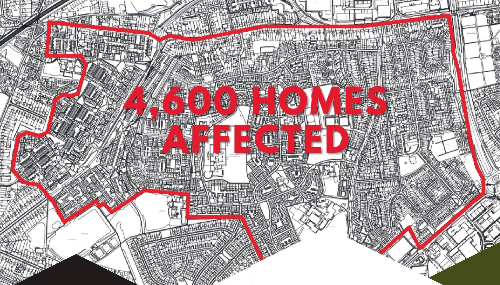
Public campaign materials and community discussions have referred to figures of up to 4,600 homes; residents should compare these figures against any future formal planning submission or council documentation.

Source: BDBC Planning Public Access and future submitted planning documents if an application is made.
Where can I see campaign leaflets or sign the petition?

Residents groups and campaigners may distribute leaflets and petitions locally or online; compare campaign materials with official council planning documents and developer consultation pages.

What has the developer published so far?

The developer’s public engagement and consultation materials are published on the project consultation website; these show engagement materials rather than any confirmed demolition list.

How will vulnerable residents (elderly, disabled, neurodiverse) be rehoused?

No formal rehousing plan has yet been published publicly. Residents should request any future rehousing strategy and equality impact information once a planning application is submitted.

Where can I find official Soverign (SNG) Buckskin and South Ham FAQs?

You can view the official FAQs and consultation information for the Buckskin and South Ham proposals on Sovereign’s consultation website.

Where can I find official Soverign (SNG) Former Camrose football ground FAQs?

The official FAQs and consultation information for the Former Camrose football ground project are available on the project consultation website.

Where can I find official Soverign (SNG) Pinkerton Road area FAQs?

You can find the official FAQs and consultation information for the Pinkerton Road area on the Pinkerton consultation website.

Mythbusters – Common Rumours and the Facts

Short myth → truth entries to correct misinformation and clarify common rumours about the redevelopment.

Myth: "The redevelopment is already approved."

Truth: No — without a submitted and approved planning application, no approval exists.

Myth: "Sovereign has already chosen which homes will be demolished."

Truth: No final demolition list can be confirmed until a planning application including demolition is approved.

Myth: "The council is hiding documents."

Truth: Councils are required to publish meeting minutes, planning documents and decisions; if a document is missing, residents can request it via official council channels.

Myth: "Residents can be evicted without compensation."

Truth: UK law protects residents; compulsory purchase requires compensation and rehousing processes.

Myth: "The redevelopment is definitely happening."

Truth: Nothing is certain until a planning application is submitted and approved; proposals may change or be refused.

Myth: "The council and Sovereign are secretly pushing this through."

Truth: The council must act independently as the planning authority; decisions follow public statutory procedures.

Myth: "Consultation is over."

Truth: Statutory consultation occurs after an application is submitted; developers may also run additional engagement beforehand.

Myth: "Sovereign can ignore resident feedback."

Truth: Planning submissions normally include consultation feedback and a Statement of Community Involvement.

Myth: "The council can approve this in secret."

Truth: Planning decisions are made in public meetings or through published delegated decisions.

Myth: "SNG will immediately use CPOs to force people out."

Truth: Compulsory Purchase Orders are a formal legal process requiring justification, notices and compensation.

Myth: "There’s nothing residents can do."

Truth: Residents can submit planning comments, attend meetings, petition councillors, and request documents through official council systems.


Political Party Positions on Buckskin & South Ham Regeneration

This table summarises publicly available party positions, council actions and community responses relating to the Buckskin & South Ham regeneration programme. Each row links to primary documents (council minutes, consultation responses, party statements and local reporting) so readers can verify the evidence directly. The summaries are intended as a concise, evidence‑linked briefing for residents, journalists and councillors; they do not replace the original documents and should be checked against the linked sources before quoting or publishing.

Political Party Position on Regeneration Factual Evidence What This Means for Residents
Labour Labour councillors are likely to support regeneration where it delivers new housing, investment and infrastructure improvements. No public evidence has been found showing Labour opposing the SNG regeneration framework. Basingstoke regeneration policy supports redevelopment to improve housing quality and reduce inequality.

Source: Basingstoke Regeneration Report
Labour would likely support redevelopment with conditions around affordability, consultation and community investment rather than opposing demolition-led regeneration outright.
Conservative Conservatives currently overseeing the council process appear supportive of managed regeneration rather than campaigning against redevelopment. Buckskin & South Ham are identified as priority regeneration areas within council planning documents.

Sources: Council Regeneration Report

SNG Masterplan Update
Conservatives appear likely to support redevelopment while attempting to negotiate mitigation measures and infrastructure improvements rather than stopping the scheme entirely.
Liberal Democrats No formal local Liberal Democrat campaign against the regeneration plans has been identified. Liberal Democrat national planning policy supports sustainable development and stronger environmental protections.

Source: Liberal Democrat Green Policy
Liberal Democrats would likely support stronger consultation, resident protections and greener development standards, but no evidence has been found showing opposition to redevelopment itself.
Green Party Greens generally oppose demolition-heavy redevelopment projects that displace communities or increase overdevelopment. Green Party planning policy prioritises community-led planning, refurbishment and environmental protection.

Source: Green Party Policy Platform
The Green Party would likely favour refurbishment of existing homes and oppose large-scale demolition or Compulsory Purchase Orders affecting residents.
Reform UK No published local Reform UK policy on the Buckskin & South Ham regeneration proposals has been identified. No formal statements, council motions or campaign materials specifically addressing the Buckskin & South Ham regeneration plans have been publicly published by Reform UK at this time. Residents should not assume Reform UK supports or opposes the redevelopment until a formal local policy or candidate statement is published.
All In All In emphasises a community‑first, equality‑led approach: listening to residents, representing under‑represented groups and delivering locally‑driven solutions. The party’s local pages highlight door‑to‑door engagement, candidate work in wards and a commitment to co‑designing responses with residents rather than top‑down imposition. Factual evidence on the party’s local priorities is available on the All In website (about, our work and candidate pages). The site describes local engagement by Councillor Stacy Hart and candidate Dani Davies and stresses resident listening and community co‑design, but it does not publish a detailed, site‑specific policy on Buckskin & South Ham redevelopment.

Source: All In — homepage
All In — Our work
While All In has not published a specific Buckskin & South Ham policy, their stated priorities imply they would favour early, personalised engagement, co‑design of proposals with affected households, and pilot/refurbishment options where feasible rather than immediate large‑scale clearance. This is an inference from their local messaging; for a definitive position on Buckskin & South Ham, request a written statement from the party or the local All In candidates.
Basingstoke & Deane Independents Prioritise ward‑level scrutiny and local control; oppose demolition‑led programmes without robust oversight and alternatives such as refurbishment pilots. Evidence from council scrutiny motions and Overview Committee papers calling for transparent governance of the regeneration programme; references in Local Plan / policy papers about masterplans and design codes that enable ward scrutiny.

Sources: Basingstoke & Deane council minutes & committee papers
Draft Local Plan 2024–2042 (Policy SPS2 / regeneration)
Residents can expect B&DI to press for ward‑level oversight, demand refurbishment pilots and seek written guarantees on any use of Compulsory Purchase Orders before compulsory purchases proceed.

Last updated: 11 April 2026. Next scheduled update: early 2027

Councillor Positions on Buckskin & South Ham Regeneration

This table summarises publicly available councillor positions, council actions and community responses relating to the Buckskin & South Ham regeneration programme. Each row links to primary documents (council minutes, consultation responses, party statements and local reporting) so readers can verify the evidence directly. The summaries are intended as a concise, evidence‑linked briefing for residents, journalists and councillors; they do not replace the original documents and should be checked against the linked sources before quoting or publishing.

Councillor Positions on Buckskin & South Ham Regeneration

Political Party Position on Regeneration (Q1–Q6) Factual Evidence What This Means for Residents
Luke Murphy No Response Received Yet No Response Received Yet
Gary Watts No Response Received Yet No Response Received Yet
Julie Harper No Response Received Yet No Response Received Yet
Steve Trumm No Response Received Yet No Response Received Yet
Hayley Eachus No Response Received Yet No Response Received Yet
Richard Court No Response Received Yet No Response Received Yet
Val Elliot No Response Received Yet No Response Received Yet

Questions sent 11 April 2026. Deadline: 17 April 2026. All responses published in full without editing.

Last updated: 11 April 2026. Next scheduled update: early 2027

Regeneration Contact Details

Key contact details for local organisations and the council’s regeneration teams, including phone numbers, email addresses, websites and guidance on who to contact for different enquiries.

Basingstoke and Deane Borough Council

Council
👤 Contact

[No specific contact]

📞 Phone 01256 844844
📍 Address

Civic Offices, London Road, Basingstoke, RG21 4AH

🌐 Website Visit website
Notes

Main switchboard and housing team contacts. When contacting about housing or council services, include your postcode and a brief summary in written enquiries for faster routing.


Regeneration & Consultations
Planning
📩 General Enquiries Local.plan@basingstoke.gov.uk
🏢 Property & Assets Martin.JonesPS@basingstoke.gov.uk
🎭 Economy & Culture daniel.garnier@basingstoke.gov.uk
Notes

Use the general regeneration email for consultations and broad enquiries. Direct asset-specific matters to Property & Assets. Contact the Director for strategic or project-level queries.


Our Mission

Basingstoke Redevelopment gathers council meeting records, committee papers, developer updates, local reporting and community responses into a single, searchable hub. We make it easier for residents, journalists and researchers to follow decisions, timelines and public participation so communities can hold elected representatives and delivery partners to account.

The site is designed to be transparent, searchable and practical: timelines are sortable, documents are linked to their sources, and entries are colour coded by organisation to clarify who said what and when. We aim to support informed civic engagement and to make it straightforward for anyone to trace the progress of the Buckskin and South Ham regeneration.

Data Sources

Methodology

Data collection
Records and items on this site are gathered from publicly available sources listed in the Data Sources section. Each entry is checked and manually reviewed for relevance and accuracy before publication.

Verification and updates
We aim to reflect the original source faithfully but do not publish official minutes or legal documents. If you believe an entry is incorrect, incomplete, missing, or should be removed, please contact us and we will investigate and correct the record promptly.

Scope and limitations
This site aggregates public information to make it easier to follow the regeneration programme; it is not an official repository and should not be treated as a substitute for primary documents held by councils or organisations.

Data Usage

The data presented on this site is collected from publicly available sources. You are welcome to use this information for:

  • Research and academic purposes
  • Journalism and reporting
  • Civic engagement and advocacy
  • Personal interest in Basingstoke Redevelopment

Attribution
If you use our data in publications or research, please attribute it to Basingstoke Redevelopment.

Accuracy and responsibility
We make reasonable efforts to ensure accuracy but cannot guarantee completeness or timeliness. For authoritative documents, legal records, or official minutes, always consult the relevant council or organisation’s website.

This is an unofficial service. It is not affiliated with Basingstoke Council, Sovereign Network Group (SNG), Newman Francis, the Basingstoke Gazette or any other organisation.

The information presented is compiled from publicly available sources and has been manually reviewed. It is not an official record. For authoritative documents and official minutes, please refer to the relevant council or organisation’s official website.

If you notice an error, please contact us so it can be reviewed and corrected where appropriate.